

Blog
2026.01.19
Snowy Mt. Apoi (Jan 18)
I recently climbed Mt. Apoi, so here a report of what it currently looks like. 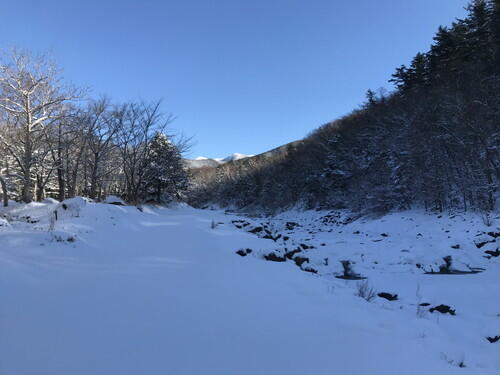 The Ponsanushibetsu River is frozen over and covered with snow.
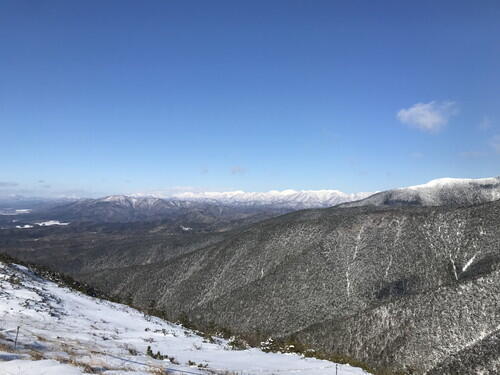
The sky was so clear, I could see Mt. Pinneshiri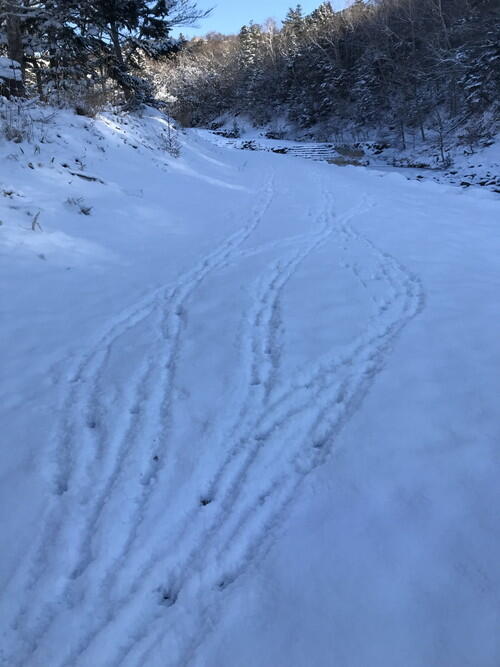 Ezo deer footprints
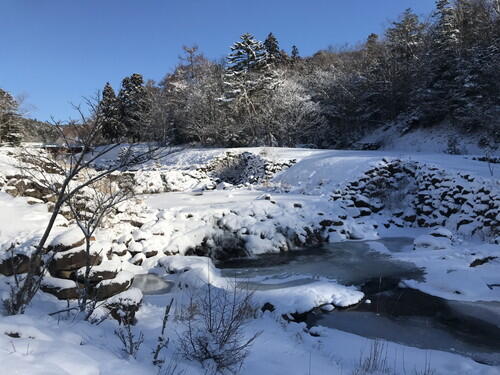 Ponsanushibetsu River
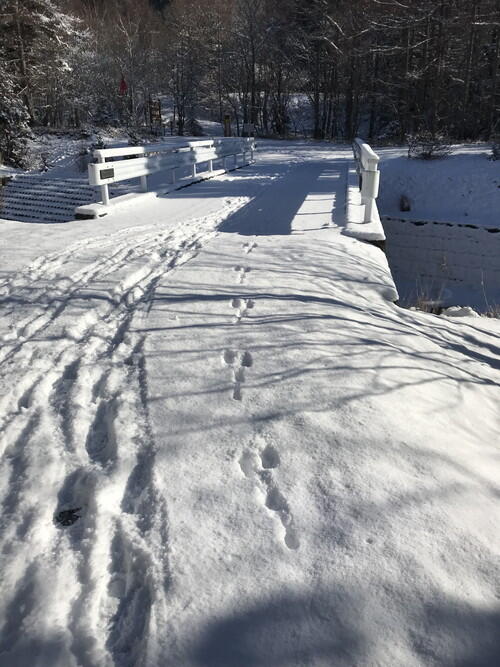
These footprints belong to a rabbit! It's been a while since I've seen rabbit prints.
The prints on the left are from people.
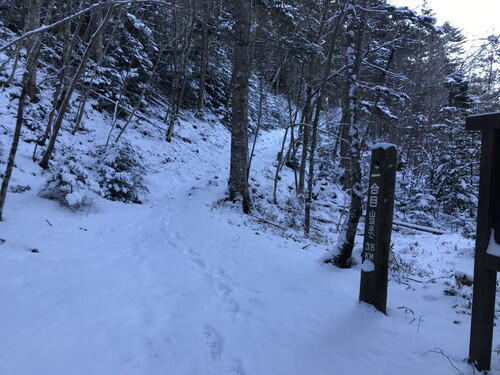 1st Station
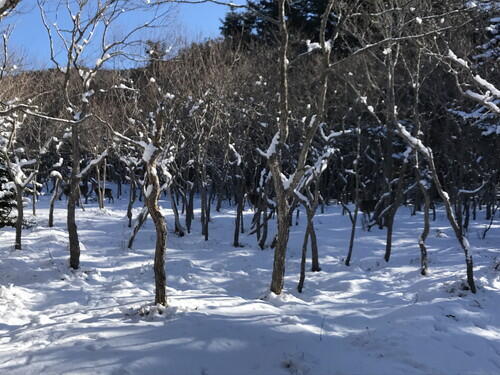 There's a herd of Ezo deer along the birch trees (probably hard to see in this photo though).
 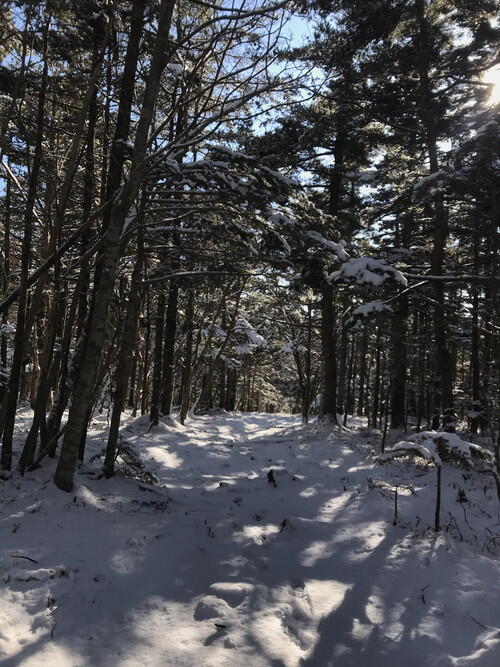 The snow in the middle of the forest is pristine.
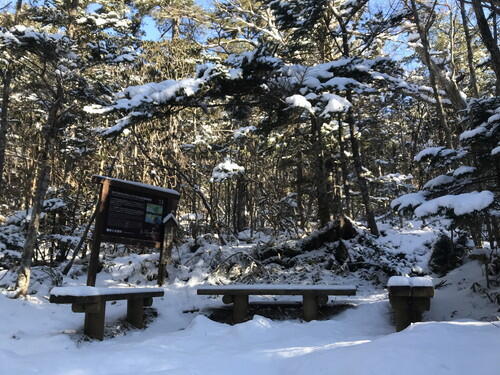 2nd Rest Spot
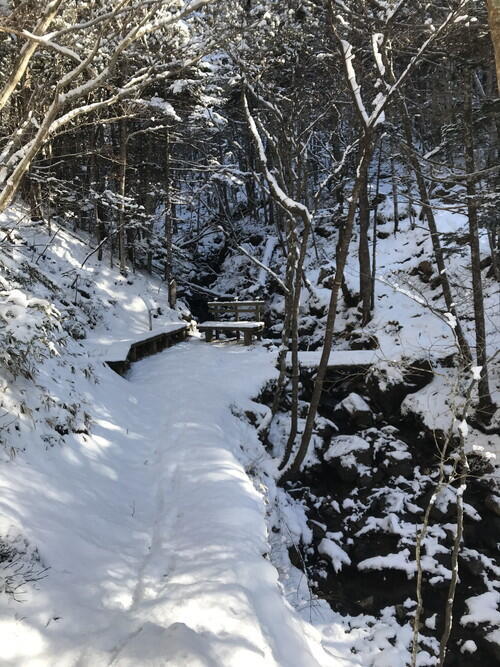 4th Rest Spot
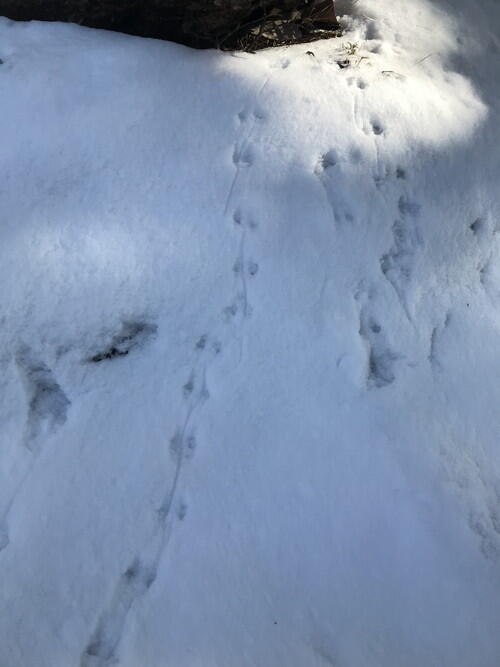 Near the 5th Rest Spot, I think I found mouse prints!
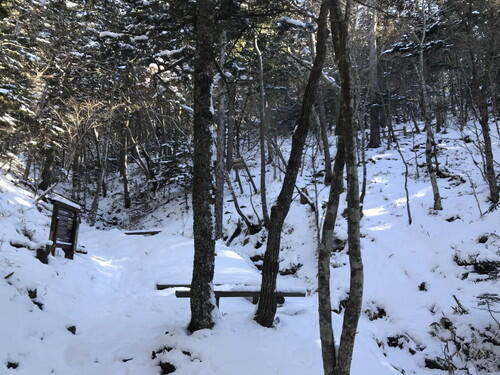 5th Rest Spot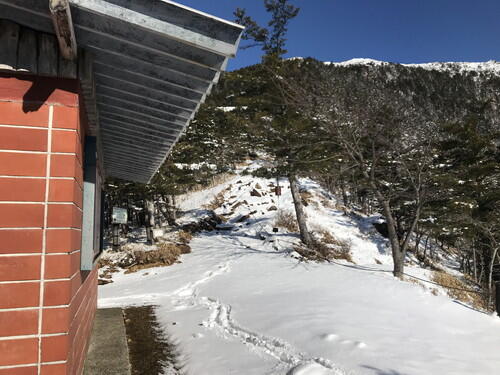
5th Station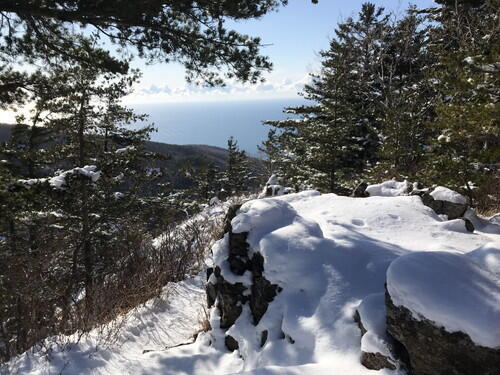 You can see the Pacific Ocean from the 5th Station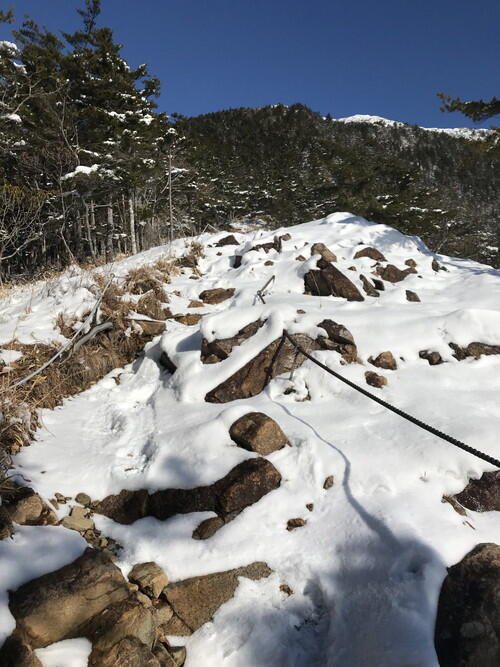
Heading towards Ume-no-se from the 5th Station.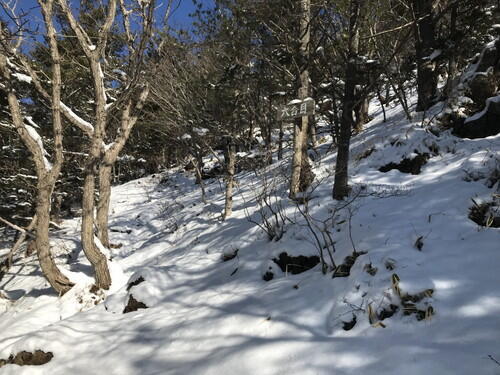 6th Station
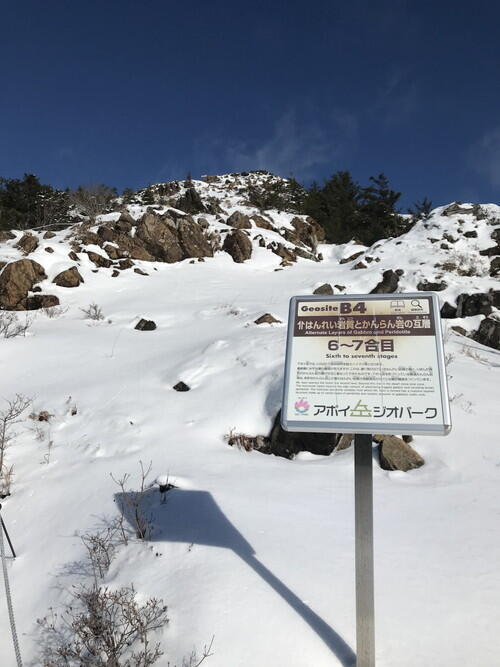 6-7th Station
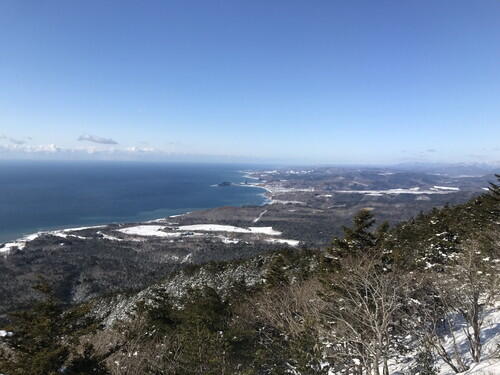 Pacific Ocean view from the 6-7th Station
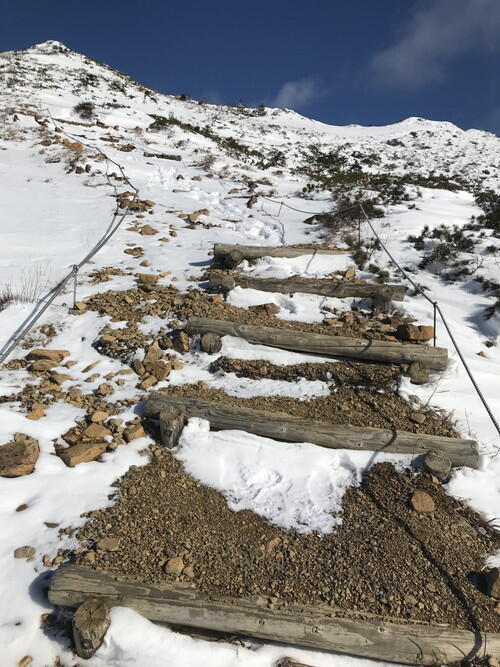 Closer towards Uma-no-se, the wind was blowing the snow around and I could see the ground in spots.
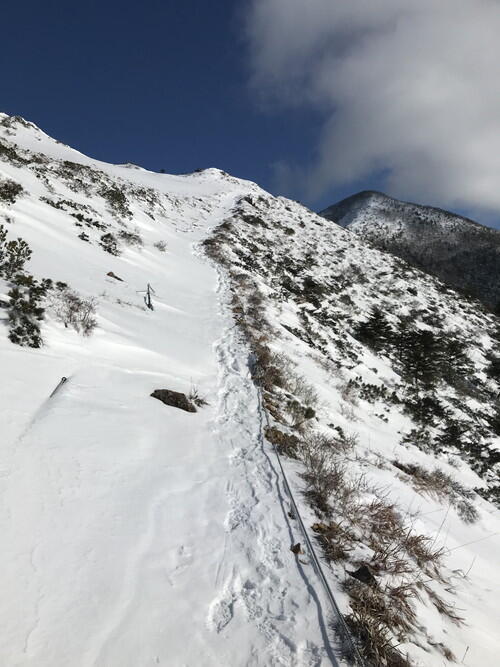 Uma-no-se flower fields
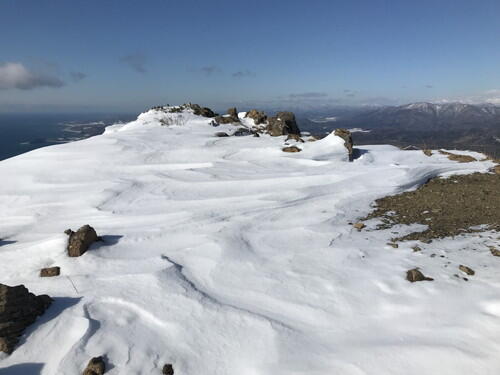 The wind creates pretty patterns in the snow.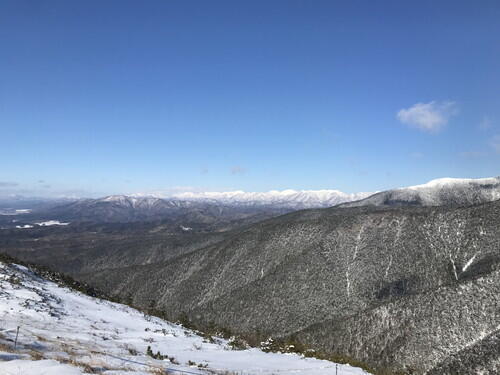
The Hidaka Mountains from Uma-no-se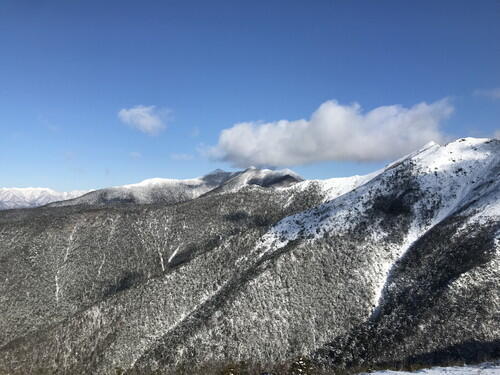
Mt. Pinneshiri from Uma-no-se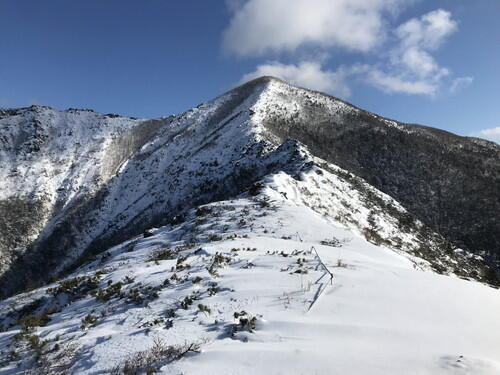 The top of Mt. Apoi from Uma-no-se
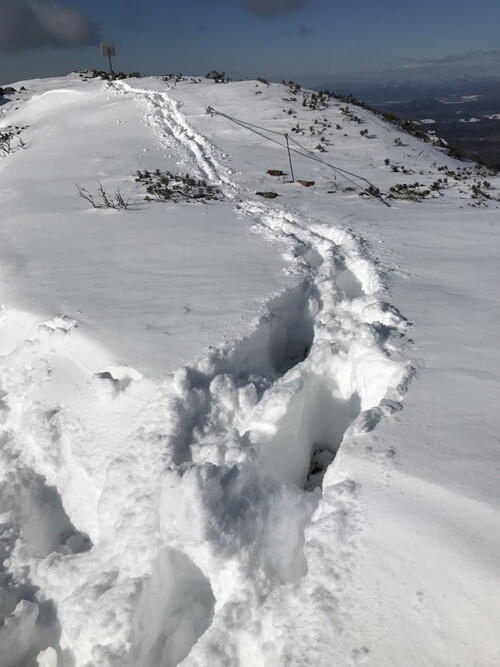 Between the 7th and 9th Stations, there were some spots where the snowdrifts were so deep that the snow came up to my knees.
Every year, overhanging snow builds up on the left side of the ascending path. 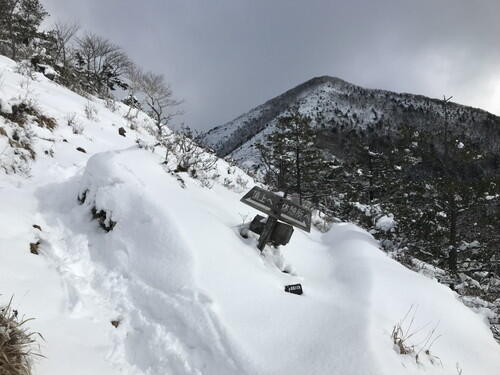 The old Horoman flower fields
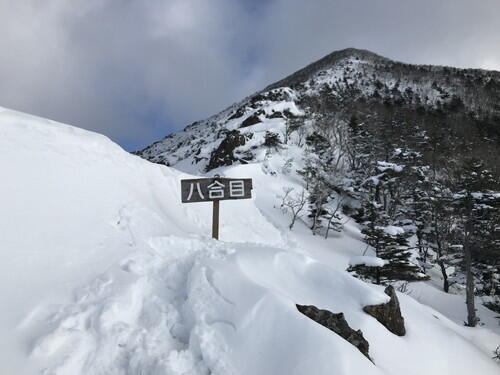 There was significant snow accumulation around the 8th Station.
 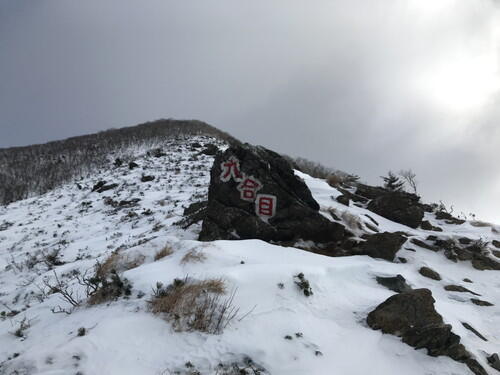 9th Station
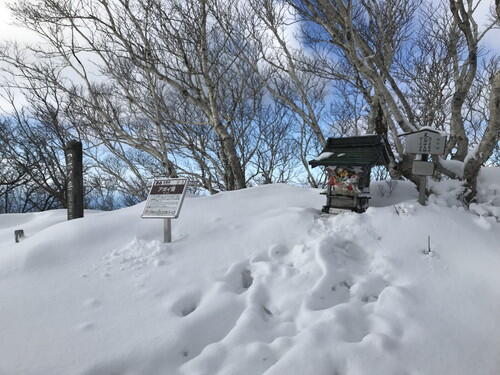 The summit of Mt. Apoi
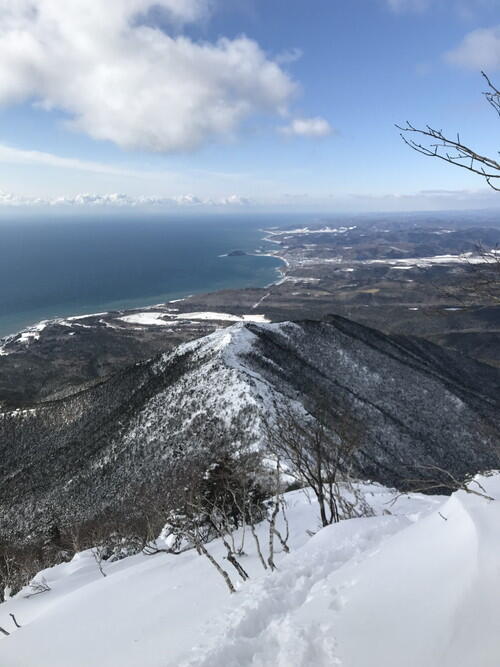 A view of the ridgeline from the 9th Station
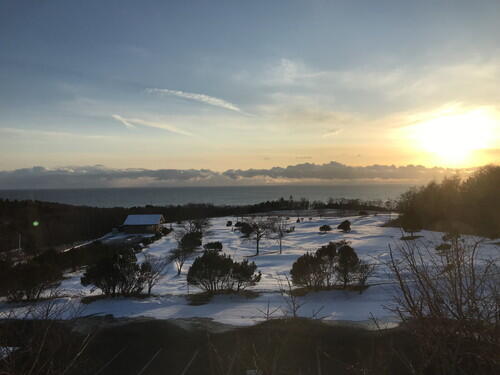 The sunset over the Pacific Ocean as seen from Hotel Apoi Sanso
A word of caution:
On this day, two other hikers joined him on this climb up Mt. Apoi. If I had been alone, I might have turned back at the 5th Station. Seeing a set of footprints go up the mountain made the climb considerably easier for me. Even so, I had to detour around two large snowdrifts I couldn't climb over.
On the way back down, I think I slipped and fell at least eight times between the 5th Station and the 2nd Rest Spot. I might not have slipped if I had crampons and trekking poles. There is ice accumulation under the snow, which makes it hard to see.