


Blog
2022.08.09
International Day of World's Indigenous People on Aug 9
The Samani Public Library created 3 short, animated stories based on local Ainu legends, include the story behind Mt. Apoi's name. The stories are narrated in Ainu and in Japanese, complete with English subtitles.
These animations were made with the intent to better understand Ainu culture and their way of life. These stories will also be used for educational purposes, such as part of the Samani Elementary School and Samani Junior High School "Hometown and Apoi Studies" curriculum and social education programs.
Mt. Apoi Geopark also plans to post the video QR codes on geopark signboards and will create a permanent exhibit in the Mt. Apoi Geopark Visitor Center.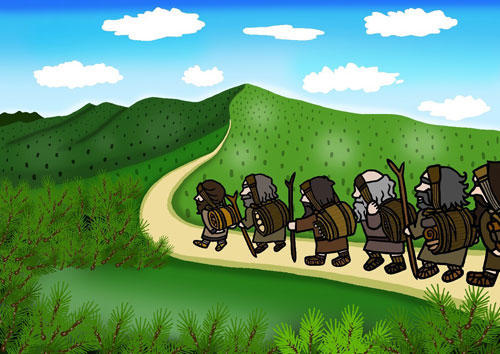
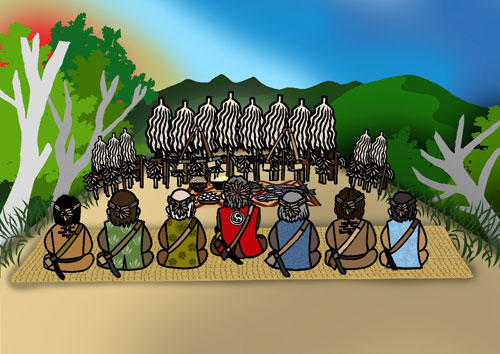
- The Legend of Mt. Apoi
Why is the symbol of Samani, Mt. Apoi, named as such? What does the annual "Apoi Fire Festival" have to do with fire?
Ainu narration, English subtitles: https://youtu.be/vYvoynA_QCc
Japanese narration, English subtitles: https://youtu.be/C__ybTiZu0E
- Tale of the Three Rocks
Parent and Child Rocks, Sobira Rock, and Fuyushima's Hole Rock, how are these three rocks connected?
Ainu narration, English subtitles: https://youtu.be/t7DWRXazrc8
Japanese narration, English subtitles: https://youtu.be/ocH4abNUSVw
- The Legend of Hotafunpe
Hotafunpe, a whale-shaped hill in West Samani is actually...??
Ainu narration, English subtitles: https://youtu.be/ZDUdfNsydv8
Japanese narration, English subtitles: https://youtu.be/4Xgy0zf1P9A
2022.08.06
Underwater Images, Before and After a Red Ride 2021 Geoparks & Oceans
An article from Mt. Apoi titled "Underwater Images Before and After a Red Tide 2021" was published by the UNESCO Global Geopark Network in a digital magazine called "Geoparks & Oceans."
New publication on Geoparks and the Oceans.
https://globalgeoparksnetwork.org/?p=6821
#GeoparksandOceans #UNESCOGlobalGeoparks #GlobalGeoparksNetwork #GGN
1) The Red Tide Event in 2021
At the end of September 2021, a widespread red tide event, which decimated marine life, occurred along the Pacific Ocean coastline of eastern Hokkaido, where the Geopark is located. According to research institutes in Hokkaido, the species of the genus Karenia (K. mikimotoi and K. selliformis), a marine dinoflagellate, was detected in parts of the red tide plankton. Along the Samani coastline, many dead sea urchins and sea whelks were discovered, and it is predicted that some marine life will take approximately 7-10 years to fully recover, creating a very grave situation. Mt. Apoi Geopark continues to report updated information. (2021 Samani Area Marine Vision News)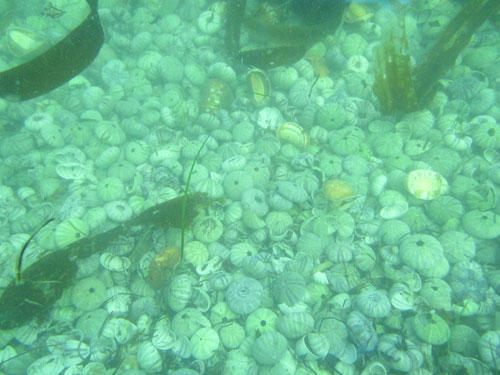
September 28, 2021 Empty sea urchin shells along the Samani coastline
2) Images Before the Red Tide
A local Hidaka kelp fisherman once said, "kelp grows due to photosynthesis under the rolling waves, creating its own marine ecosystem." In order to better understand these words, we took underwater footage in 2019 and held a movie screening for the local community.
Underwater footage, "Samani's Kelp and Ocean Life"
https://www.youtube.com/channel/UCC1q16MinPSMliPSXT04fBw/featured
These showings started an open dialogue between locals who knew about kelp fishing and those who did not, and those who knew little about the ocean floor topography, sediment, and marine life. We heard many voices that day, including locals that hope the abundant ocean life will continue for many years to come. We hope to continue to educate and inform our community about the importance of the ocean's ecosystems.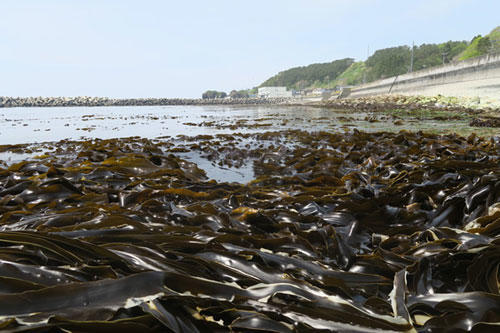
Kelp at Fuyushima district in Samani, Hokkaido