


Blog
2021.10.22
~Frost~ Winter is Almost Here
The mountains surrounding Samani are full of autumn color, but this morning there were a few places around town that had frosted over.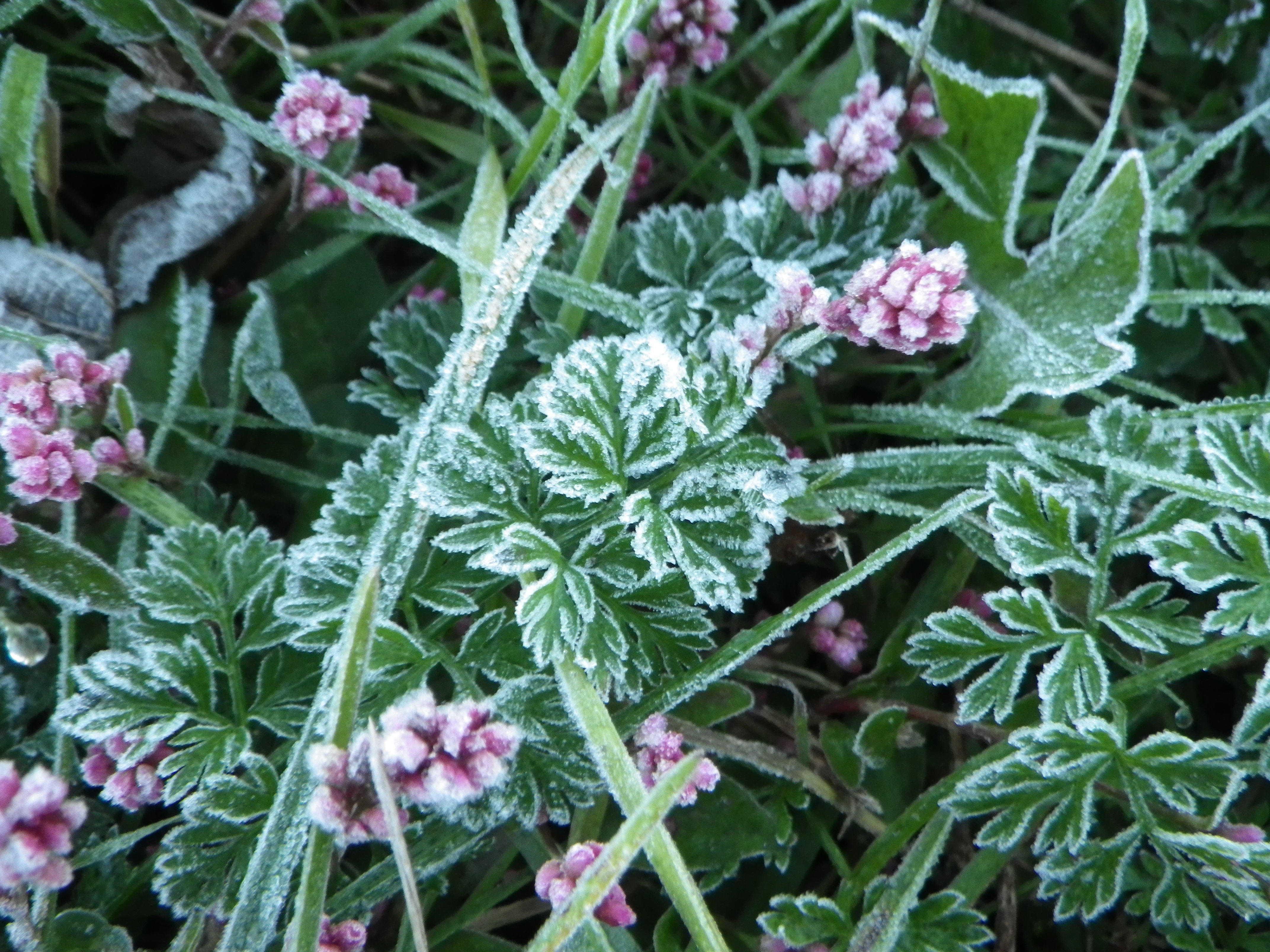
I was told that fairly soon we'll be able to see beautiful "needle ice" in the fields. I've never taken a photo of the needle ice before, so I hope I can see them soon.
Needle Ice: When the temperature reaches below freezing, the water in the ground rises and freezes in thin needle-like columns through capillary action. Needle ice is formed when water is present in the ground, which is a different phenomenon than the sublimation of water vapor in the air that causes frost.
2021.10.19
Horoman Gorge Fall Foliage Peak
I went to check out the fall foliage in Horoman Gorge on October 14th. It was perfect timing. The combination of evergreens, and red and yellow leaves mixed together was beautiful.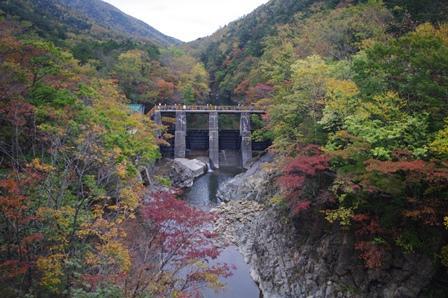 Fall colors at the 2nd Horoman River Power Plant
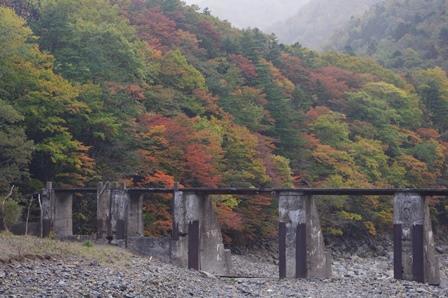 The former power plant
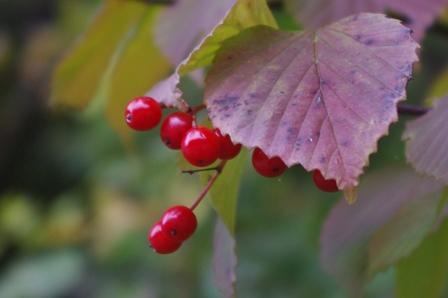 Viburnum berries
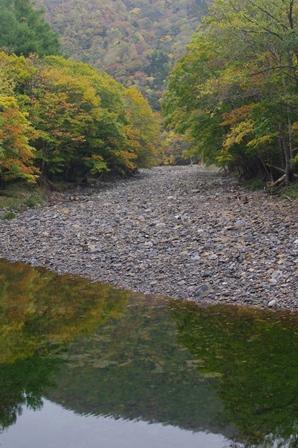 Reflected on the water
The Japanese White Pine can also be found here in the Horoman Gorge at the northmost limit of its habitat, and the Inari Shrine. Be careful while driving but definitely take some time to check out the fall colors.
2021.10.06
Changes in the Ocean
Recently the national news has been reporting on major changes in the ocean, in particular to sea urchin and salmon in the Pacific Ocean around Hokkaido so I would like to share some information about the situation here in Samani.
"Dolphin Washed Ashore"
On Sunday, September 26, 2021, on Samani's election day, the body of a dolphin was washed ashore near the Taisho Tunnel. Usually you would expect a whale, but it was no longer than 4 meters in length and definitely a dolphin. After talking with the locals, they believe it may have washed up a few days' prior as the smell from the dolphin had permeated the surrounding neighborhood.
This reminded me of two things. A Hubbs' beaked whale washed up on the shores of Samani in 2015 and 2018 and researchers came from all across Japan to study it. The second is that the Ainu people offer prayers when whales wash up on the shore, and that practice is being handed town here in Samani.
In the past it was fairly common for whales to appear on Samani shores, and the local people would gather with their kitchen knives and cooking pots in hand.
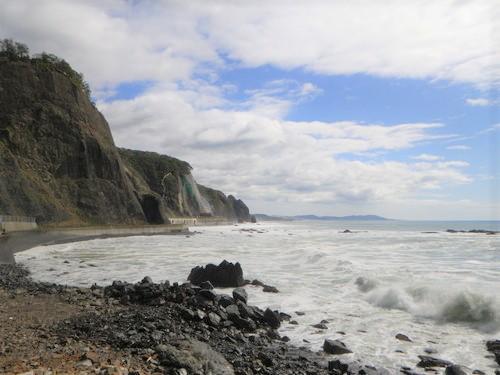 Cape Erimo/Hidaka Yabakei area. Quite a few waves on October 2nd.
"Bleached Sea Urchin and Mui Washed Ashore"
Starting around September 9, 2021, there have been several news stories about dead sea urchin and mui chiton mollusks being washed ashore. There have also been stories on the news and in newspapers about dead salmon being caught in nets along Hokkaido's Pacific coast.
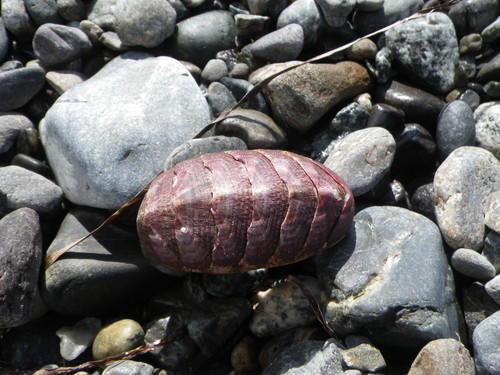 Mui (chiton mollusks) shell
According to the Sept 26, 2021 Hokkaido Newspaper, the ocean water turned brownish-red mid-month, proof that a red-tide has occurred. A red-tide means that a large amount of plankton (karenia & mikimoito) is in the water. In mid-September Erimo, a neighboring town, received a large amount of rain due to a low-pressure system that moved through the area, but it's not clear if that was the cause of the red-tide.
According to the Oct 2, 2021 Hokkaido Newspaper, the Erimo Fishing Cooperative (including half of Samani) lost 1280 salmon and 10 tons of sea urchin. Hidaka Central Fishing Cooperative (including half of Samani) lost 60 salmon. This red-tide all around Hokkaido could be caused by large amount of plankton from western Japan but further observation is needed.
On October 10, 2021, we conducted a survey around the Taisho Tunnel in Samani's Fuyushima area. The coastline here had a different scent to it (most likely due to the dead sea creatures). There were many bleached sea urchins that had lost their spines (mostly Ezo bafun sea urchin), and quite a few mui chiton mollusks. Other things we noticed were intact whelk, mussels with temporary roots attached, and the roots of Hidaka kelp. This could be due to a typhoon or the rising temperatures of the ocean, and although we don't know the actual reason, for now we are documenting our findings. Local fisherman told us that similar occurrences have happened in the past and sea urchin could not be fished for several years after that.
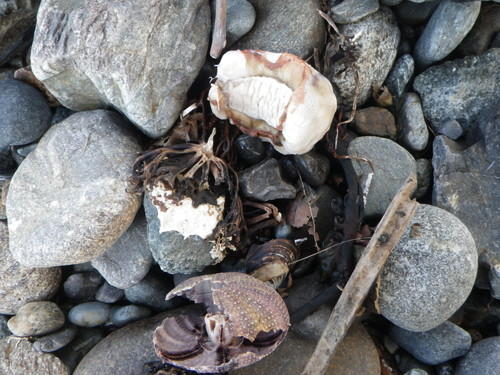 Mui (mussel), sea urchin, kelp root
On Oct 2, 2021, a researcher from Shikoku came to the Mt. Apoi Geopark Visitor Center after surveying Mt. Apoi, so I asked them about the red-tide of the Seto Inland Sea. Red-tides occur frequently in the Seto Inland Sea. In particular, it affects farmed yellowtail. As a native of Shikoku, the damage caused by a red-tide in the open sea is surprising.
We are currently focusing on two different methods in order to get to the bottom of this "change in the ocean" issue. First is utilizing the Three Principal Viewpoints: bird's eye view/fish eye view/bug's eye view. This includes comparing the situation with Shikoku's, searching for the bigger picture, and documenting the current situation. Secondly, by studying the past. We are looking into Samani's past records to uncover new knowledge and viewpoints.