


Blog
2021.03.16
Mt. Apoi Winter Hike Monitoring Tour
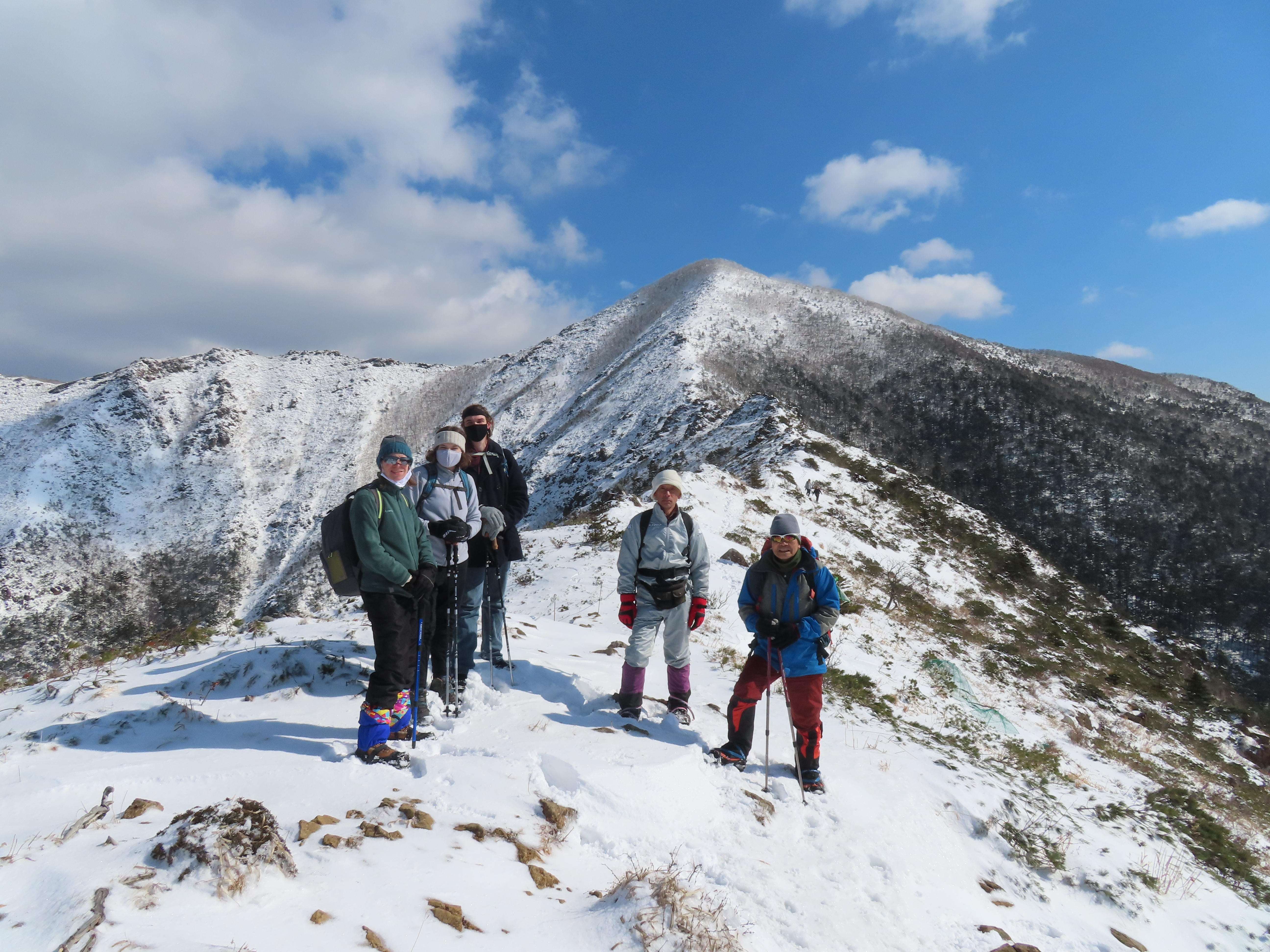
Towards the end of February, we held a guided winter hike up Mt. Apoi for foreign visitors. This time we had two participants, two guides, one interpreter, and one geopark staff. Since our participants had never attempted a winter hike, before heading towards the trailhead they were each given a set of spikes to put on the bottom of their shoes. The hiking trail is icy this time of year and this would ensure everyone has the traction needed to safely climb up the mountain. The guides cautioned everyone to keep space between their feet so you don't catch the spikes on your own leg.
As we walked towards the hiking trail our guide started explaining what kind of forest we would be walking through. The woods on the lower half of Mt. Apoi are a mix of coniferous and broad-leafed trees. He continued to point out some of the different pine trees that we could see. A sudden "rata-tat-tat" from a black-woodpecker brought our heads around and our guides were able to spot it high up in the trees. 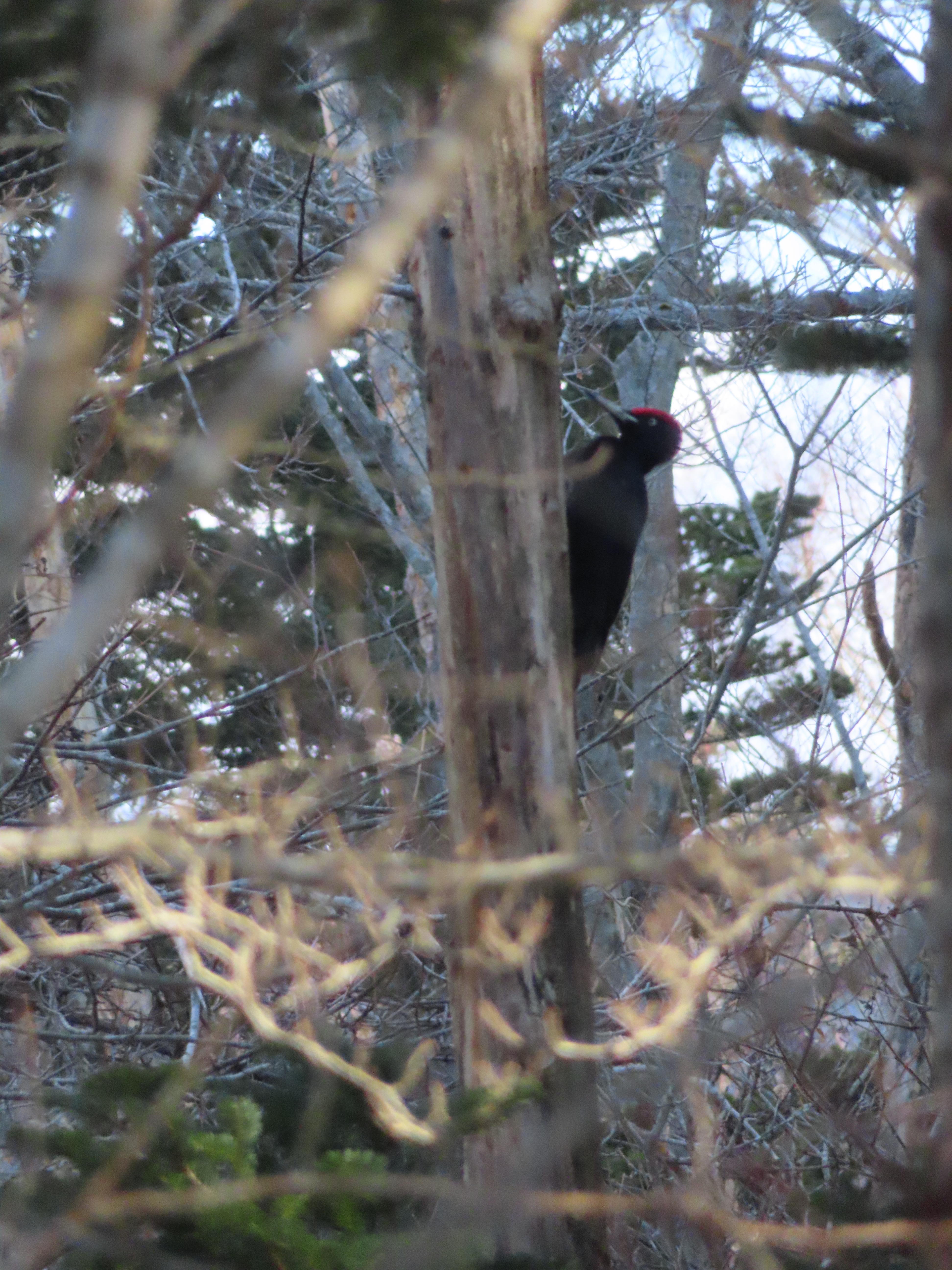
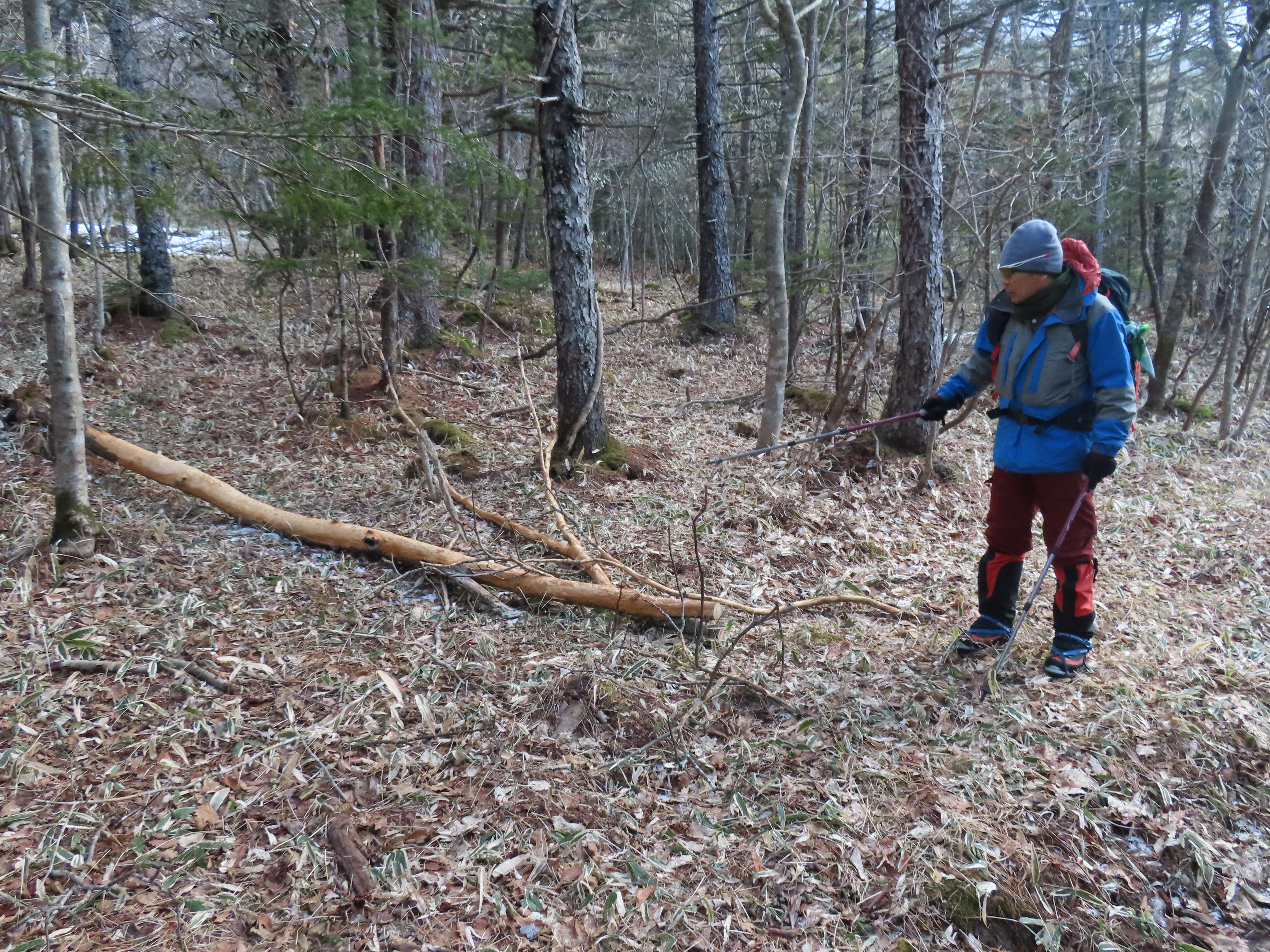
The hiking trail was completely covered in ice! The ice was so thick and even somewhat clear that at times it felt like we were climbing up a frozen waterfall. The trees prevented the strong wind from getting to us and our bodies quickly warmed up during the brisk hike to the 5th station. Along the way our guides pointed out old holes that were dug by bears, and markings on a tree that were from a deer's antlers. We even came across a fallen tree where the bark had been completely stripped by deer. 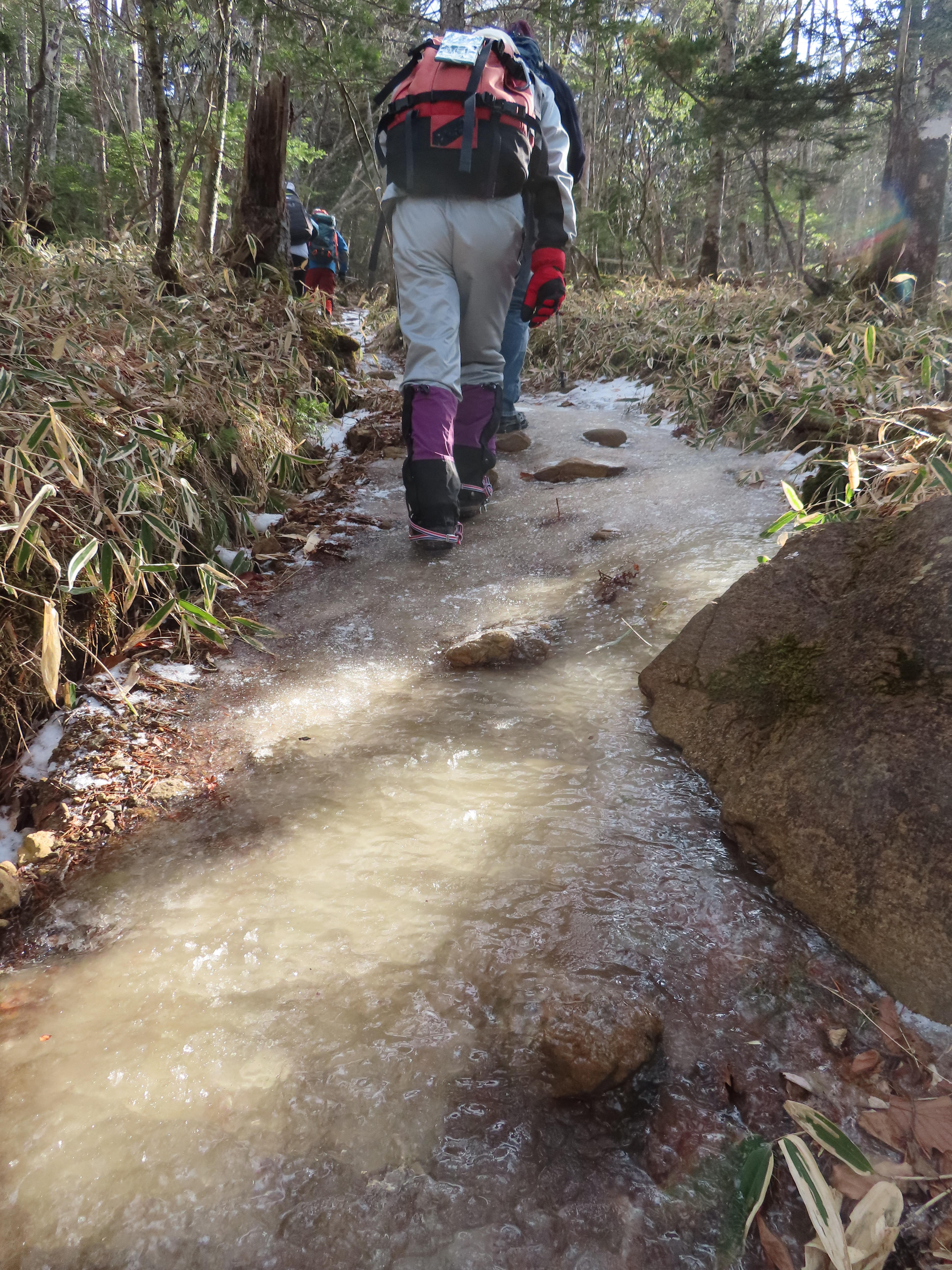
About ⅔ of the way to the 5th station our guide pointed out a marked difference in the landscape. From here the area was visibly marked by large peridotite rock outcroppings that suddenly appeared along the sides of the trail.
Shortly after that, we made it to the 5th station mountain hut. Here we took a long rest before heading further up the mountain. Leaving the 5th station also meant we left the tree line behind and the wind soon picked up even though it was a beautifully sunny day. As we climbed higher the views of Samani and the Pacific Ocean opened up before our eyes. The stark contrast of the snowy mountain and the shining blue ocean was breathtaking. As we neared the 6th station our guide began pointing out the Siberian dwarf pine trees and a rare hybrid Hakkoda pine. Even though the trail was buried in the snow there were still enough outcroppings of rock to show some of the different types of peridotite rock.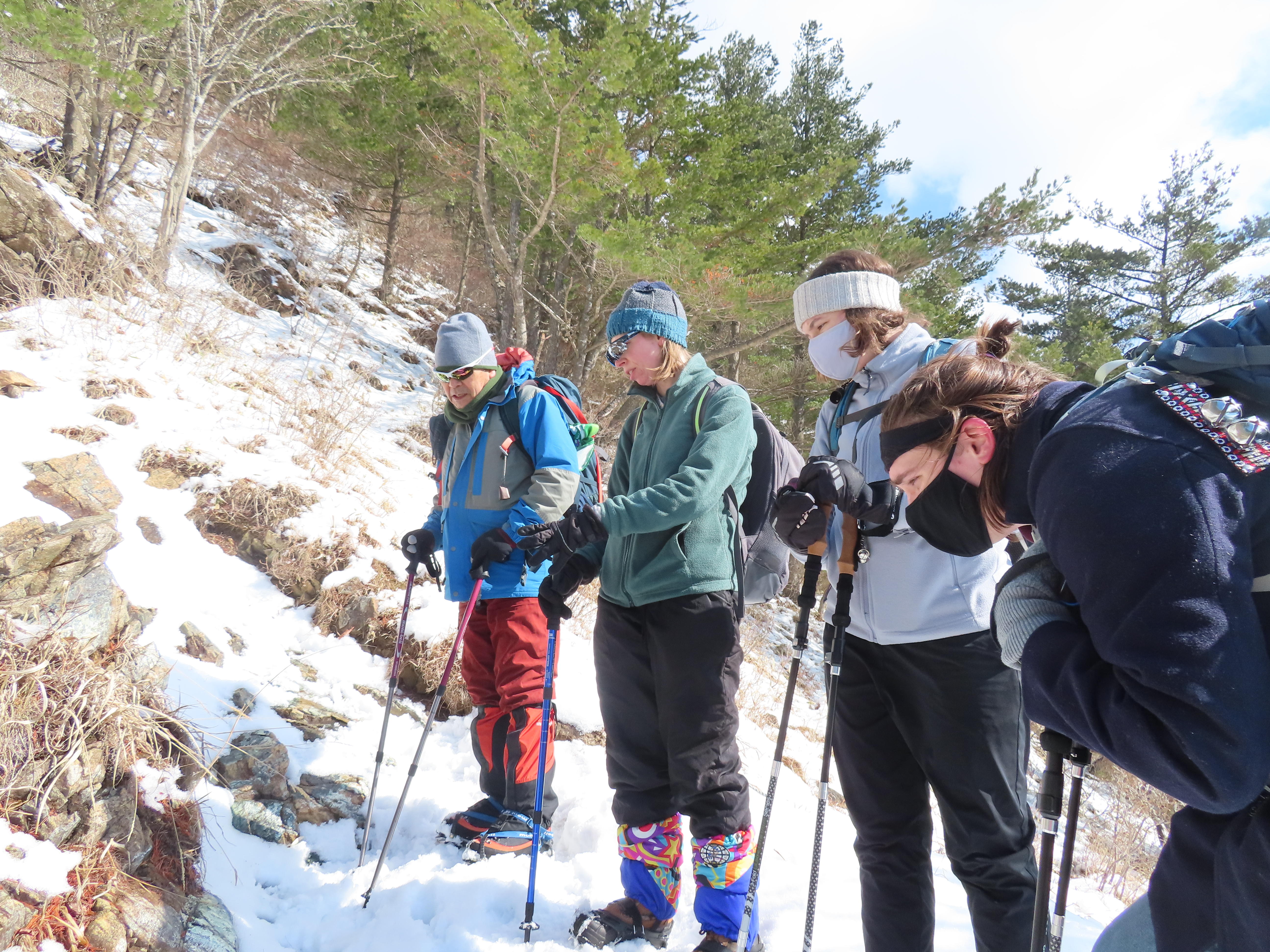 We also found a few small snow rollers along the path, a rare phenomenon where snowballs form naturally as chunks of snow are blown down a hill.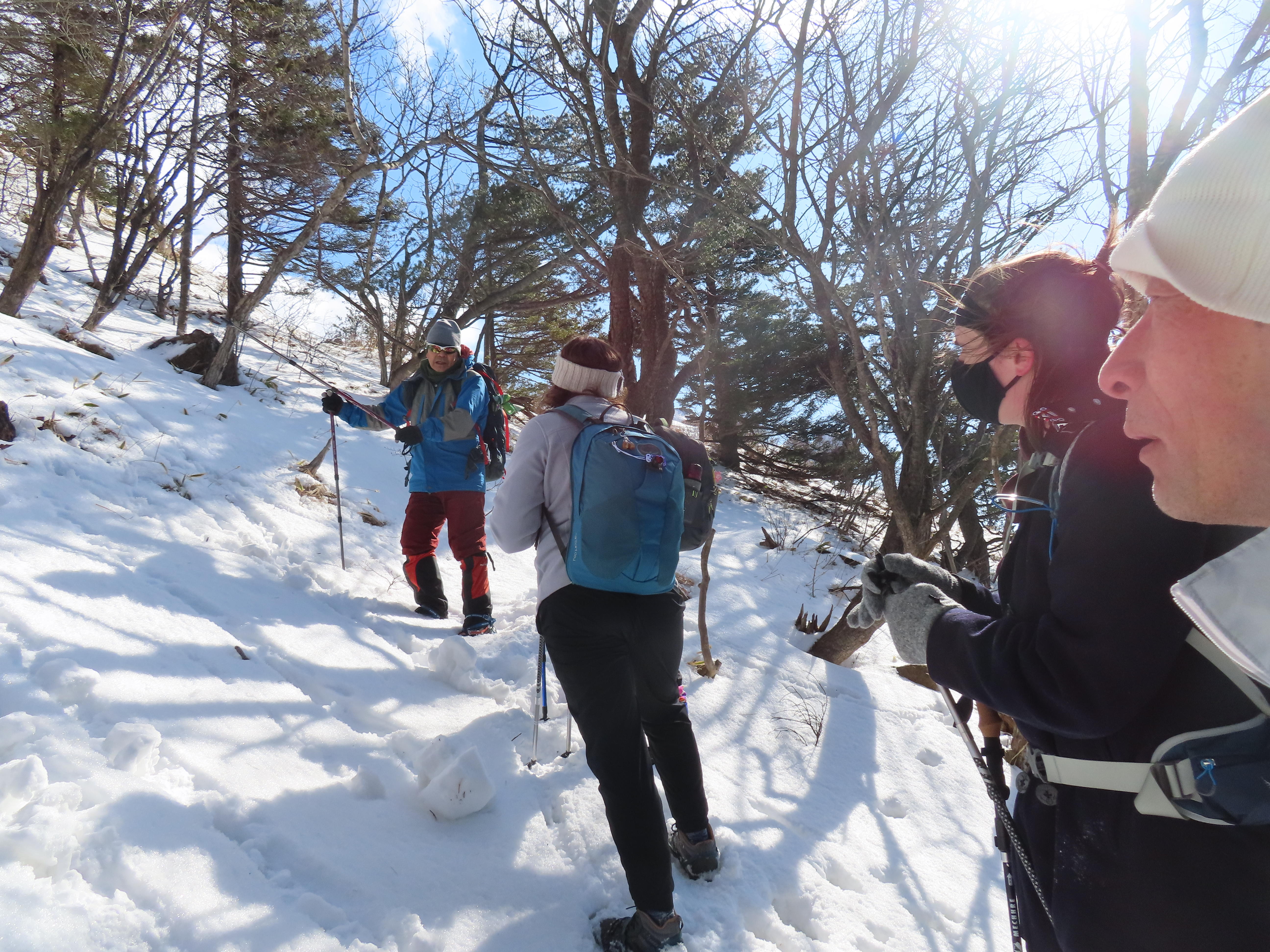
At last, we made it to our goal, the Horse's Back, just past the 7th station. From here we had a wonderful view of the Samani valley, the Hidaka Mountains, and the peak of Mt. Apoi. Our guides explained how the mountains were formed and how the unique uplifting of the land created the mysterious Apoi Mountainmass. The wind was getting steadily stronger so we decided to head back down to the 5th station mountain hut to have lunch. 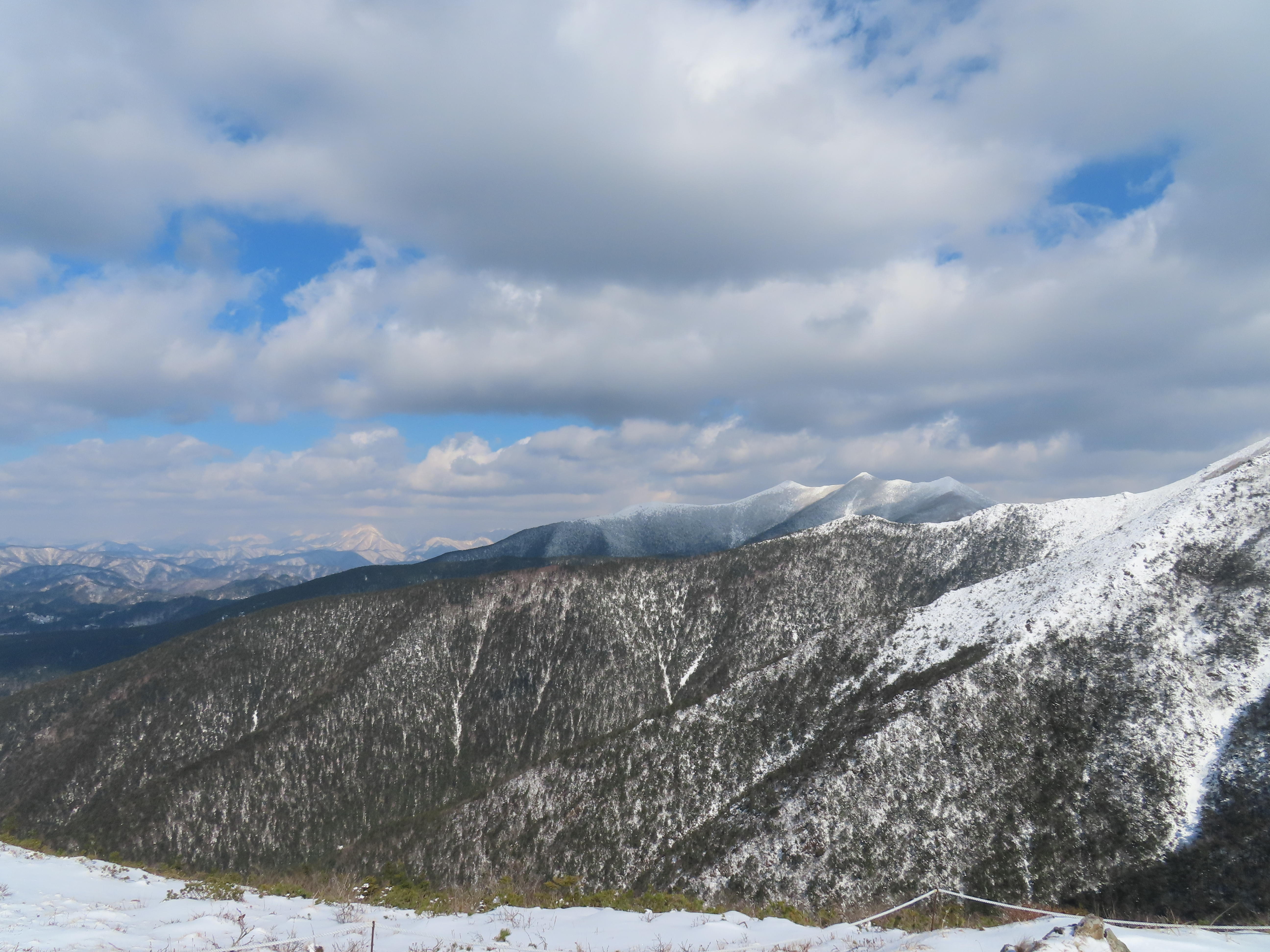
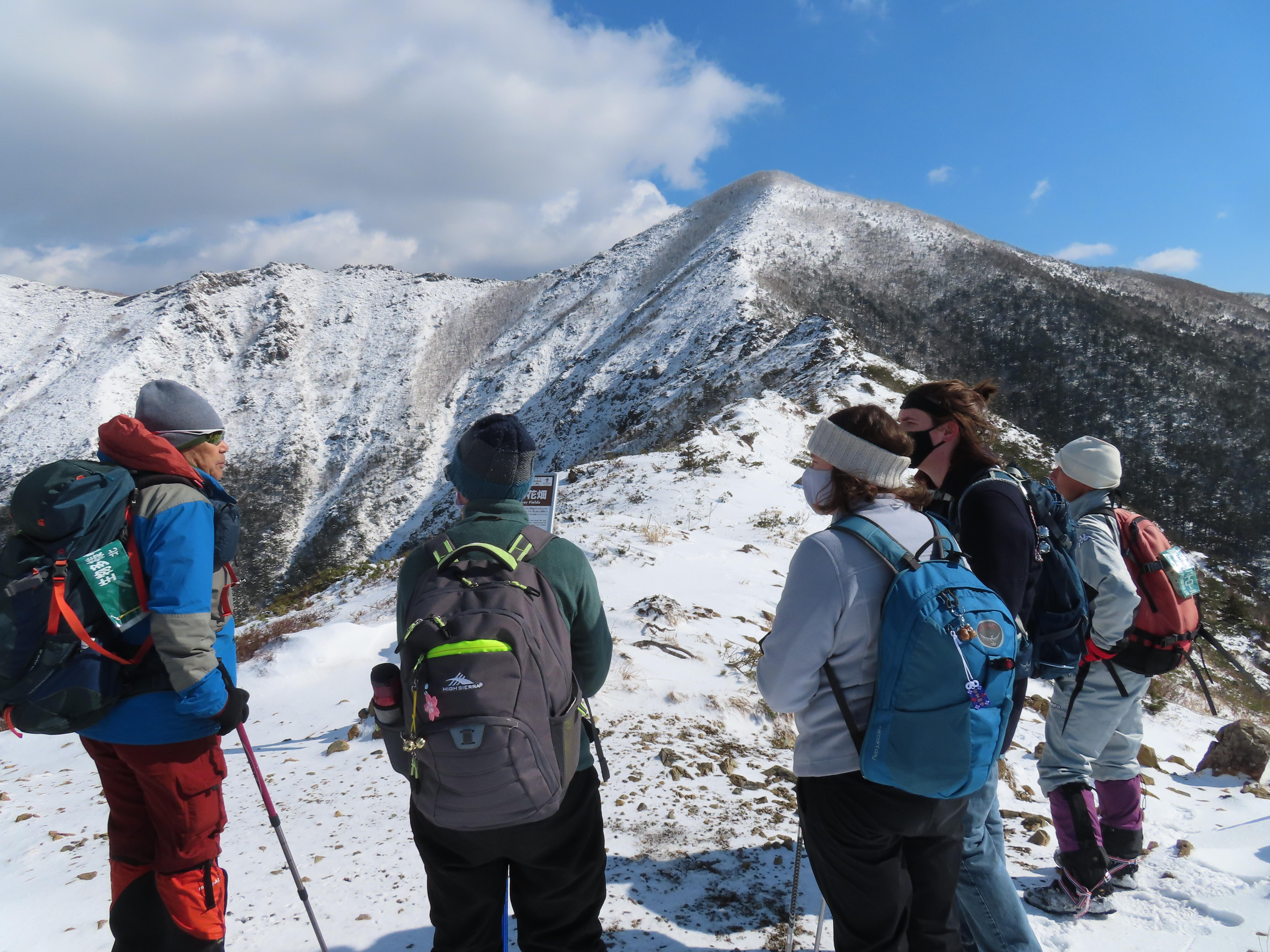
After the lunch break, we headed back down through the forest. We stopped once at the 4th rest spot and one of our guides was able to find a sleepy Japanese Crawfish (endangered species) that inhabits the mountain stream. As we came close to the final descent, we spotted a herd of Ezo deer in a small clearing. At first there were only two deer standing a ways away, then three, then five! It was a lovely way to end the hike. 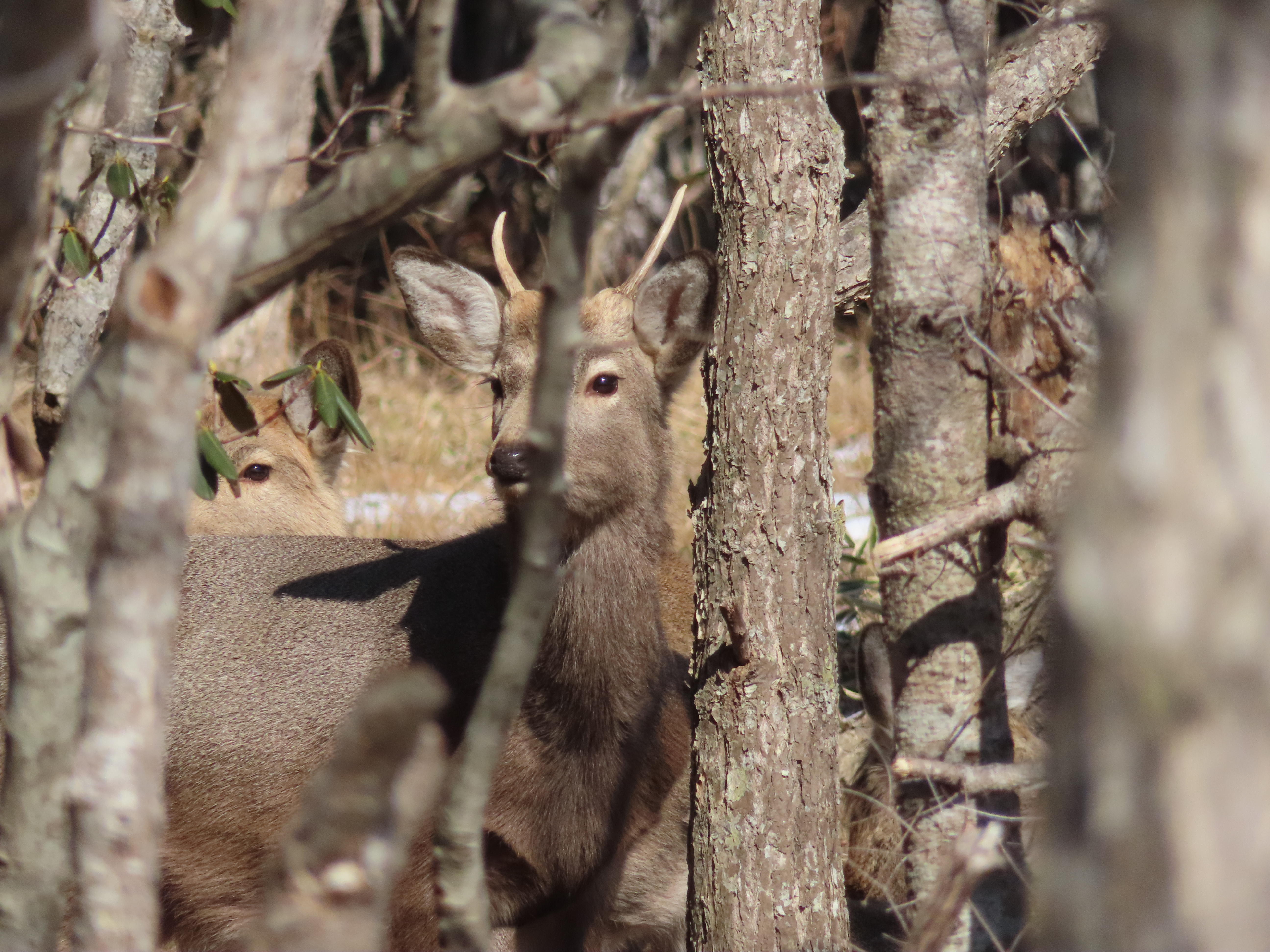 (D)
(D)